
Using paid advertising to boost a website’s exposure and generate targeted traffic on search engine results pages (SERPs) is known as search engine marketing (SEM), a digital marketing tactic. By targeting customers at the precise moment they are actively looking for a product or service, search engine marketing (SEM) offers instant visibility and highly qualified traffic, in contrast to search engine optimisation (SEO), which concentrates on organic (unpaid) ranking.
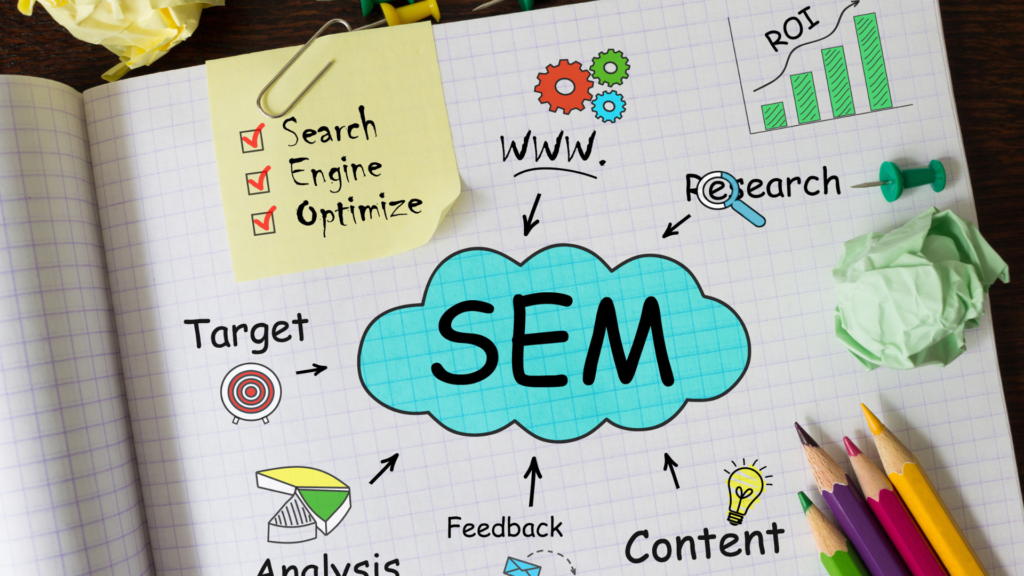
How SEM Operates :
SEM mostly uses a pay-per-click (PPC) model, which means that advertisers only have to pay when a user clicks on their advertisement. Every time a search query is performed, an automatic ad auction drives the process.

Important elements of a SEM campaign consist of:
Keyword research:

Advertisers place bids on particular terms and phrases that prospective clients use when looking for related goods or services.
Ad Creation:

To grab users’ attention and promote clicks, compelling ad content is written, including headlines, descriptions, and calls-to-action (CTAs).
Ad Auction:

To select ad placement, search engines such as Google Ads (previously Google AdWords) and Microsoft Advertising (Bing Ads) assess bid amount, ad quality, relevancy, and user context (location, device, time) in real-time.
Landing Pages:

To maximise return on investment, the advertisement points to a specific landing page on the website that is optimised for user experience and conversion objectives (such as purchase or sign-up).
Principal Advantages of SEM :
Quick Results & Instant Visibility:
Instantaneous ad placement at the top of search engine results pages (SERPs) can provide rapid traffic and possible conversions, which is particularly helpful for seasonal campaigns or new product launches.
Targeted Reach:
SEM makes it possible to precisely target audiences based on location, demographics, search intent, and user behaviour, guaranteeing that advertisements are seen by motivated customers.
Measurable Performance:
Data-driven optimisation and budget control are made possible by the tracking and analysis of specific metrics like clicks, impressions, conversion rates, and return on ad spend (ROAS).
Budget Control:
By establishing daily budgets and maximum expenses per click and only paying for actual clicks, advertisers have complete control over their expenditures.
I can provide you a side-by-side comparison of SEM and SEO or even a detailed tutorial on how to start up your first Google Ads campaign to assist you determine whether SEM is the best option for your company’s objectives. Right now, which would you find most helpful?